
Adapting Traditional Poker Logic to Virtual Reality Environments
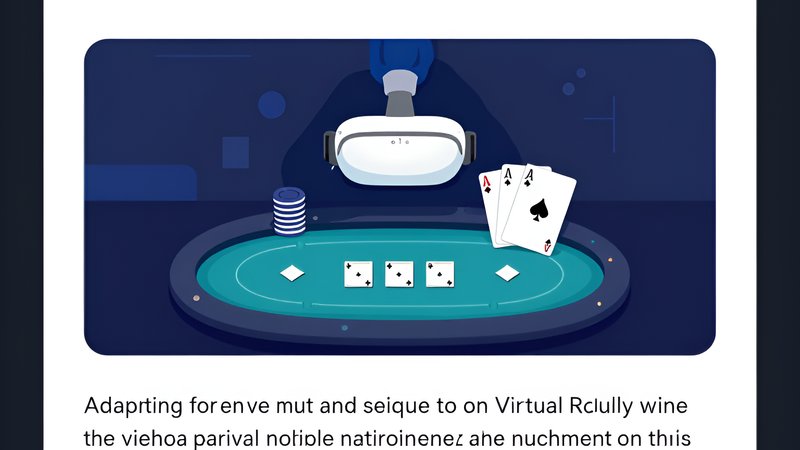
The shift from a 2D screen to a 3D immersive environment changes more than just the visuals; it potentially changes the psychology of the game. In our opinion, while the fundamental rules of poker remain the same, the way players interact in VR could introduce new variables into their approach.
The Psychology of Presence
In a standard online poker game, you are playing against avatars. In a VR poker room, you are playing against a presence. Based on our review, the ability to see a player's avatar lean in or shift their position may create a perceived 'tell', even if the software is designed to be neutral. However, players should be cautious: these movements may be programmed or accidental and might not reflect the player's actual hand strength.
It is essential to remember that there is no such thing as a winning strategy that can eliminate the element of chance. Poker is a game of probability, and results will always vary.
Responsible gambling is paramount. Please remember that gambling should be a form of entertainment, and you should always play within your limits.
Positional Awareness in 3D Space
One interesting aspect of VR poker is the spatial awareness. In our opinion, being able to physically 'look' around the table may change how some players perceive the flow of the game. While this doesn't change the mathematical odds of the cards, it may affect the emotional state of the player, potentially leading to more aggressive or conservative play based on the 'vibe' of the virtual room.
Managing Distractions in VR
Unlike a browser-based game, VR is an all-encompassing experience. This could be a double-edged sword. On one hand, the immersion may help you focus on the game. On the other hand, the sensory load of a high-fidelity VR environment could lead to fatigue faster than traditional gaming. According to our methodology, we found that players who take regular breaks tend to maintain better decision-making consistency.
The Role of Social Interaction
VR poker often includes integrated voice chat and gestures. This adds a layer of social engineering to the game. A player may use voice cues to project confidence or hesitation. However, based on our review, these are often superficial. The core of the game remains the math of the pot and the probability of the draw.
Comparing VR to Live Tables
VR poker attempts to bridge the gap between online and live poker. While it captures the atmosphere, it lacks the physical stakes of a real casino. In our opinion, this can lead some players to take risks they wouldn't take in person. We advise players to treat virtual chips with the same respect as physical currency to avoid unexpected losses.
Conclusion on VR Approach
Adapting to VR poker is more about managing your environment and your psychology than changing the rules of the game. While the immersive elements are exciting, the mathematical foundations of poker remain the only reliable guide. By staying disciplined and aware of the psychological traps of immersion, players may find a more balanced experience.